
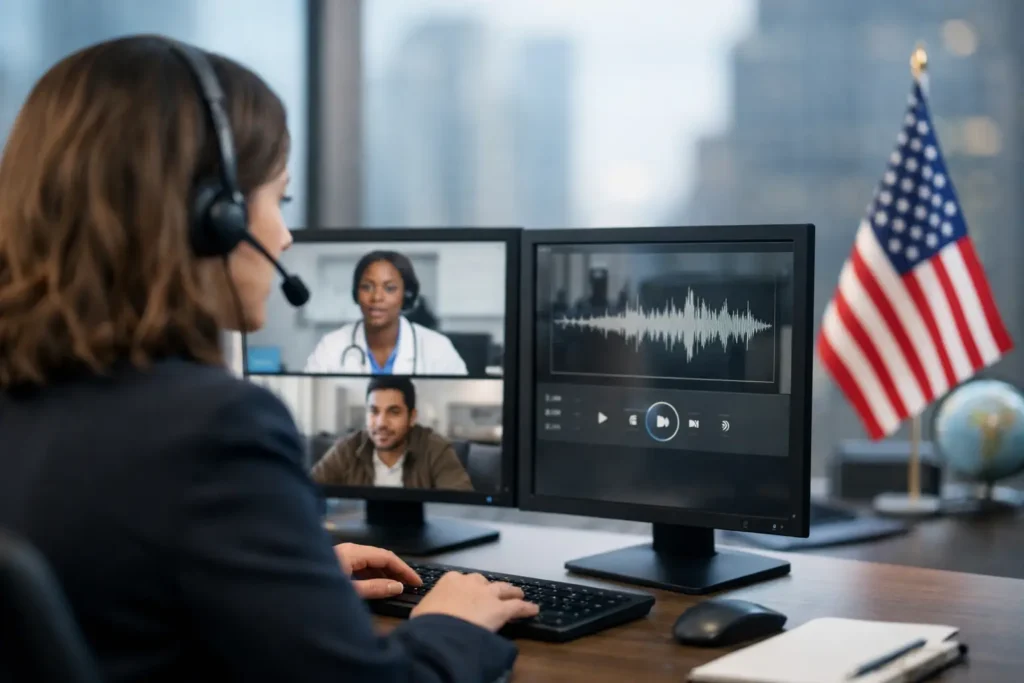
A patient in a rural clinic, a parent at a school meeting, and a witness preparing for a legal proceeding may all need an interpreter within hours, not days. The future of remote interpretation is being shaped by that reality: people need timely language access, but they cannot sacrifice accuracy, confidentiality, or the ability to be understood when the stakes are high.
Remote interpretation is no longer only a backup when an in-person interpreter is unavailable. For many organizations and individuals, it has become a practical way to connect with qualified interpreters across the United States and in more language combinations than a local market can support. The strongest future model, however, is not technology replacing people. It is technology helping trained human interpreters reach the right conversation at the right time.
Why Remote Interpretation Is Becoming a Standard Service
Video remote interpretation and over-the-phone interpretation have changed expectations. A healthcare provider can request an interpreter for a limited-English-proficient patient. A law firm can arrange a confidential consultation with a client in another state. A business can bring international participants into a meeting without waiting for travel arrangements.
Speed is a major reason for this shift, but it is not the only one. Remote delivery expands access to interpreters in less common languages, including languages that may be difficult to source locally. It also gives organizations more flexibility when meetings change, hearings are rescheduled, or an urgent medical conversation cannot wait.
This does not mean remote interpretation is right for every situation. A complex court proceeding, a sensitive psychiatric evaluation, or a multi-day negotiation may benefit from an on-site interpreter who can read the room and manage longer interactions. The best option depends on the setting, language pair, technical conditions, and consequences of an error.
The Future of Remote Interpretation Will Stay Human-Led
Artificial intelligence is influencing language services, particularly through automated captions, meeting summaries, speech recognition, and scheduling tools. These tools can be useful for low-risk internal communication or as an accessibility aid. They should not be treated as a substitute for a qualified human interpreter in legal, medical, immigration, or official settings.
Interpreting requires more than changing words from one language to another. A skilled interpreter listens for intent, tone, regional usage, incomplete statements, and terminology that may have legal or clinical meaning. They manage turn-taking, ask for clarification when necessary, and interpret faithfully without adding advice or personal opinions.
That distinction matters when a patient describes symptoms, when an attorney explains rights, or when a family discusses an immigration matter. An automated system may produce a sentence that sounds fluent while missing a critical detail, confusing a medication name, or mishandling a dialect. In high-stakes conversations, fluency is not the same as accuracy.
Technology Should Support the Interpreter, Not Replace Them
The most useful technology will operate behind the scenes. Secure video platforms, digital scheduling, interpreter matching, electronic session records, and quality monitoring can make service faster and more dependable. Better audio equipment and bandwidth management can also reduce the interruptions that make a remote conversation frustrating.
Human oversight remains essential. Providers will need to verify interpreter qualifications, match interpreters to specialized assignments, and review quality concerns. A Spanish interpreter experienced in medical appointments may not be the right fit for patent litigation, and a court interpreter may need specific credentials under local rules.
Security and Confidentiality Will Matter More, Not Less
As remote interpretation expands, organizations must pay closer attention to privacy. A convenient consumer video app may not be appropriate for a discussion involving protected health information, legal strategy, financial records, or personal immigration documents.
A professional remote interpretation process should address secure access, private interpreter workspaces, restricted session participation, and clear procedures for handling personal information. For healthcare organizations, the platform and workflow must align with applicable privacy obligations. For legal matters, the provider should understand the importance of confidentiality and attorney-client communications.
Clients also have a role to play. They should avoid joining a sensitive session from a crowded public space, use headphones when appropriate, and confirm who is present before the conversation begins. In a remote setting, small preparation steps can protect privacy and improve comprehension.
Specialized Interpretation Will Separate Reliable Providers
The future will bring more remote sessions, but it will also bring higher expectations. Customers will increasingly ask whether an interpreter understands the subject matter, not simply whether they speak the language.
Medical interpretation requires command of clinical terminology while preserving the patient’s own words. Legal interpretation requires precision, neutrality, and familiarity with formal proceedings. Immigration-related conversations often involve personal histories, deadlines, and documents where a misunderstood date or relationship can create serious complications. Business interpretation may involve contracts, technical specifications, financial terms, or negotiations across different cultural expectations.
For this reason, organizations should not select an interpreter solely based on the lowest rate or fastest availability. A brief intake process can make a meaningful difference. Providing the language needed, type of meeting, expected duration, location of participants, and general subject matter helps the language provider assign a suitable professional.
Better Scheduling Will Improve Access to Qualified Interpreters
One of the less visible changes in remote interpretation is smarter scheduling. Rather than contacting multiple people manually, organizations are moving toward systems that identify availability, time zones, language qualifications, and subject-matter needs before a session begins.
For planned appointments, advance booking remains the best approach. It allows time to secure a qualified interpreter and share relevant non-confidential context, such as whether the appointment concerns a deposition, specialist consultation, school conference, or intake interview. For urgent needs, on-demand options can be valuable, but availability may vary by language and by the complexity of the assignment.
The goal is not simply to fill a slot. It is to reduce cancellations, avoid language mismatches, and give every participant confidence that the conversation can proceed without unnecessary delay.
What Clients Should Expect From a Remote Session
A professional session begins before the interpreter joins the call. The organizer should confirm the preferred language, including any regional variety when relevant, test the audio and video connection, and explain the purpose of the meeting. If documents will be discussed, the interpreter may need access to approved materials in advance, subject to confidentiality requirements.
During the session, speakers should use short, complete statements and pause often enough for interpretation. They should speak directly to the person they are addressing, not say, “Ask her if she understands.” The interpreter is there to convey the conversation accurately, not to become a participant in it.
If something is unclear, clarification is appropriate. A qualified interpreter should state when they need repetition or when audio quality prevents an accurate interpretation. This is a sign of professionalism, not a disruption. Guessing is never an acceptable solution in a high-stakes setting.
Choosing the Right Remote Interpretation Provider
The growth of remote services makes provider selection more important. Look for a company that uses qualified human interpreters, can explain its confidentiality practices, and understands the difference between a casual bilingual speaker and a professional interpreter.
For legal, medical, and official matters, ask whether the provider can accommodate specialized terminology, rare languages, scheduled and urgent appointments, and the platform requirements of your organization. If an in-person interpreter may be necessary, choose a provider that can advise on when remote delivery is appropriate and when it is not.
AL Waseem Translation supports clients who need accurate interpretation alongside certified translation, notarization, and other document-ready language services. That broader perspective can be useful when an interpreted meeting leads to a need for translated records, affidavits, medical reports, or immigration documents.
Preparing for What Comes Next
Remote interpretation will continue to make qualified language support more accessible across the country. The providers that earn trust will be those that combine responsive technology with experienced human professionals, clear security practices, and the judgment to recommend the right delivery method for each assignment.
When the conversation affects health, legal rights, education, employment, or immigration status, choose accuracy over convenience alone. A well-prepared remote interpreter can help ensure that distance does not become a barrier to being heard.