
Certified vs Notarized Translation for USCIS Al Waseem
A surprising number of USCIS delays start with one simple misunderstanding: applicants pay for notarization when USCIS only asked for certification. If you are wondering about certified vs notarized translation: which one do you need for USCIS, the short answer is usually certified translation, not notarized translation. The difference matters because using the wrong service can cost extra money, create confusion, and slow down a time-sensitive filing.
For immigration documents, USCIS generally requires any foreign-language document to be submitted with a full English translation and a certification from the translator stating that the translation is complete and accurate and that the translator is competent to translate. That requirement is specific. It does not automatically mean the translation must be notarized.
Order Translation Instantly.
Certified vs notarized translation: which one do you need for USCIS?
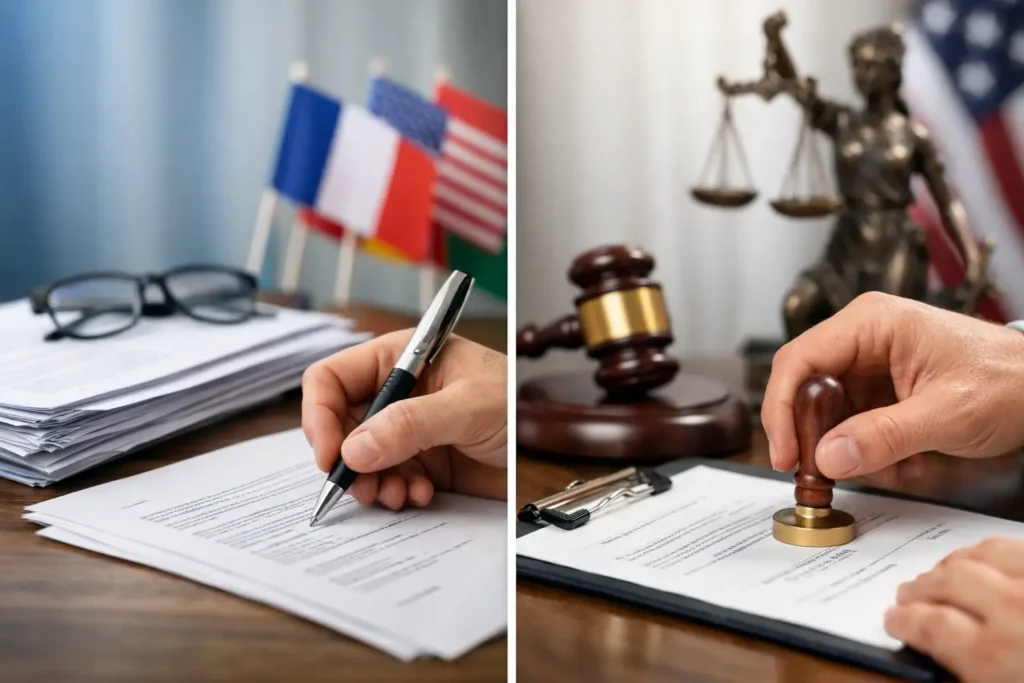
In most USCIS cases, you need a certified translation. A certified translation includes the translated document plus a signed certificate of accuracy. That certificate confirms two things: the translation is complete and accurate, and the translator or translation company is qualified to perform the work.
A notarized translation is different. Notarization usually means a notary public verifies the identity of the person signing the certification statement. The notary is not judging the quality of the translation. The notary is not confirming that the wording is correct. They are only witnessing or acknowledging the signature attached to the certification.
That distinction is where many applicants get tripped up. Notarization sounds more official, so people assume it must be better. For USCIS, that is not necessarily true. USCIS is focused on whether the translation is accurate, complete, and properly certified. Notarization may be optional, unnecessary, or requested only in special situations outside standard USCIS filing rules.
What USCIS actually asks for
USCIS instructions are generally consistent on this point. If you submit a document in a language other than English, you must include a full English translation and a translator certification. Typical examples include birth certificates, marriage certificates, divorce decrees, police records, passports, academic transcripts, and other civil or legal records.
The key word is full. USCIS does not want a summary or selected excerpts unless a specific request allows that. If the original contains stamps, seals, handwritten notes, or marginal remarks that carry meaning, those should be reflected in the translation as well. Accuracy is not just about words. It is about presenting the document in a way that supports official review.
A proper USCIS-certified translation usually contains the translated text and a signed certification statement. That statement should identify the translator or provider and confirm competence and accuracy. For most applications, that is the required standard.
Why notarization is often misunderstood
Part of the confusion comes from the fact that other agencies sometimes do ask for notarized translations. Courts, universities, foreign consulates, licensing boards, or overseas authorities may have their own document rules. Some use the term loosely. Others ask for notarization, sworn translation, apostille support, or multiple layers of authentication.
So applicants hear different advice from different places and assume USCIS works the same way. It often does not. Immigration paperwork follows its own requirements, and those should be checked carefully against the form instructions and the nature of the case.
Another reason for confusion is that some translation providers market notarization as if it were a higher level of certification. It is not a substitute for an accurate translation completed by a qualified human translator. If the translation itself is weak, notarizing the signature on the certificate does not fix the problem.
When you may need notarized translation anyway
Even though USCIS usually does not require notarized translation, there are situations where notarization can still become relevant. For example, you may be preparing one set of translated documents for multiple uses. A birth certificate might be needed for USCIS, a state agency, a foreign consulate, and a school enrollment office. One institution may ask for certification only, while another asks for notarization.
In that case, it can make sense to order a notarized certified translation if it helps satisfy all destinations at once. The practical advantage is convenience. The trade-off is that you may pay more and add a step that USCIS itself did not require.
Notarization can also be useful when a receiving organization wants extra formalities for internal review. That does not mean the translation is more accurate. It only means the certification signature has an added layer of identity verification.
Certified translation is about compliance, not decoration
For USCIS, the real issue is compliance. The translation must be complete, readable, and prepared in a way that supports official acceptance. A fancy presentation, embossed seal, or notary stamp may look impressive, but appearance does not replace the required certification language.
This is why human-only translation matters so much for immigration documents. USCIS filings often involve names, dates, places of birth, document numbers, legal statuses, and family relationships. A minor error can create inconsistencies across the file. That can trigger requests for evidence, questions at an interview, or avoidable delays.
Machine-generated output, incomplete translations, or recycled templates are risky in high-stakes filings. Accuracy has to come first, especially when the document will be reviewed alongside passports, visa records, prior filings, and identity documents.
Documents that commonly need certified translation for USCIS
Most applicants need certified translations for civil and supporting records rather than notarized translations. Common examples include birth certificates, marriage certificates, divorce judgments, death certificates, household registries, national ID cards, police clearances, adoption papers, and academic records.
Some cases also involve financial evidence, court records, affidavits, military documents, or medical records. These documents often contain specialized terminology. That is where subject-matter expertise matters. A translator working on an immigration filing should understand not only the language but also the document type and the expectations of US authorities.
How to tell what you really need
The safest approach is to start with the exact instructions for your filing. If USCIS asks for a certified translation, order a certified translation. If another agency involved in your process asks for notarization, then add notarization for that purpose.
If you are using the same translation package in several places, ask each institution what they accept before ordering. This prevents a common problem: paying for the wrong service because someone assumed all official bodies follow the same rules.
It also helps to ask the translation provider a direct question: Is this prepared specifically for USCIS submission, and does it include the required certificate of accuracy? A professional provider should be able to answer clearly and explain whether notarization is necessary, optional, or irrelevant for your case.
Red flags to avoid
If a provider cannot explain the difference between certified and notarized translation, that is a problem. If they promise USCIS acceptance without mentioning the certificate of accuracy, that is another problem. And if they rely heavily on automated translation for legal or immigration documents, that should give you pause.
A dependable provider should offer clear formatting, complete translation of the source document, confidentiality, and fast turnaround without sacrificing quality. They should also understand that immigration documents are not ordinary paperwork. They affect status, timelines, and sometimes family reunification.
Companies like AL Waseem Translation focus on this exact kind of document readiness because official acceptance depends on details being handled correctly the first time.
The practical answer for most applicants
If your document is going to USCIS, certified translation is usually the service you need. Notarized translation may be added if another authority requests it or if you want one document set for multiple official uses. But for USCIS alone, notarization is typically not the deciding factor.
What matters most is that the translation is complete, accurate, and accompanied by a proper certification statement from a qualified translator or translation company. That is what supports a cleaner filing and reduces the chance of preventable setbacks.
When immigration paperwork is already stressful, your translation should not add uncertainty. The right service is the one that matches the actual requirement, not the one that sounds more official on paper.