
24 / 7 support”
In immigration proceedings, a rejected document is more than a clerical error—it is a missed visa window, a costly Request for Evidence (RFE), or a delayed family reunion. While many applicants assume a simple signature is enough, the actual Standards of USCIS Acceptance are far more rigorous. Immigration officers demand more than just translated words; they look for “visual mirroring”—precise formatting, stamp replication, and the accurate decoding of handwritten margin notes that automated tools simply cannot handle.
AL Waseem Translation, we bridge this gap with a standard most competitors ignore. We combine our ISO-certified quality control with a verifiable, physical presence in Dallas, Texas. By enforcing a strict “100% Human Translation” policy, we ensure every seal, signature, and nuance meets the strict bureaucratic expectations of US officials, eliminating the risk of rejection.
II. The "AI Trap": Why Machine Translation is Dangerous for Immigration
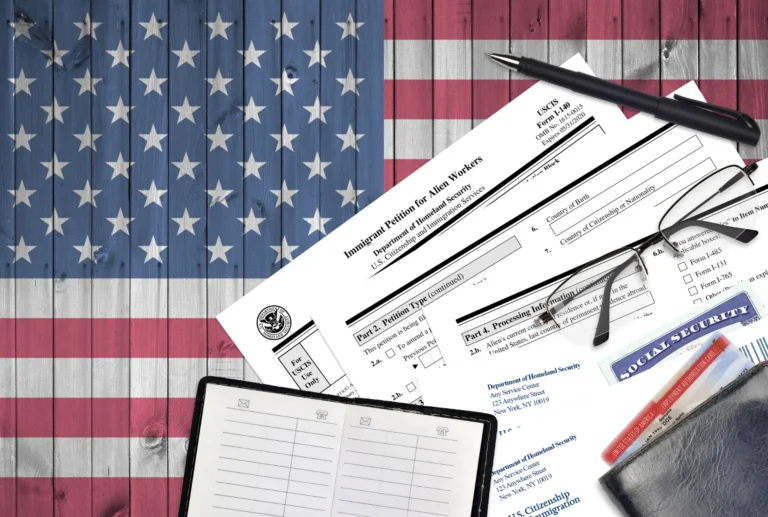
While many agencies simply warn against “Google Translate,” they rarely explain the specific legal hazards involved. Relying on AI for immigration documents is dangerous because algorithms prioritize literal definitions over legal context, frequently failing to meet the Standards of USCIS Acceptance.
For example, an AI might translate a foreign legal header as “Civil State” based on a direct dictionary match. However, a human expert knows the legally required term for US immigration forms is “Marital Status.” In the eyes of an adjudication officer, these small terminological discrepancies can signal a lack of authenticity or clarity.
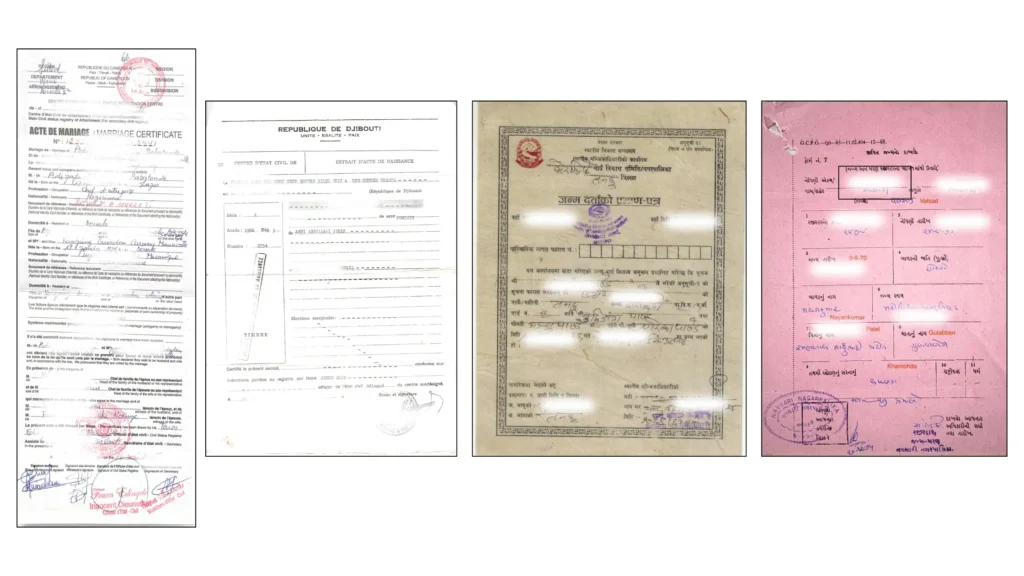
Furthermore, AI fails the “Handwriting Hurdle.” Critical documents like birth certificates and vaccination records often feature handwritten margin notes, faint official seals, or scribbled signatures. Automated tools and OCR (Optical Character Recognition) typically ignore these elements or translate them as gibberish. At Al Waseem, our “100% Human Translation” guarantee eliminates this risk. We do not rely on software to guess; our linguists decipher fading ink and interpret complex handwriting to ensure every stamp and notation is captured, preventing the technical rejections that automated services invite.
III. Visual Compliance: The "Mirror Image" Requirement
A truly compliant translation goes beyond linguistic accuracy; it must offer visual congruence. USCIS officers are not just reading; they are auditing. They need to compare the translation side-by-side with the original document without “hunting” for information. This is why strict adherence to the Standards of USCIS Acceptance requires a “Mirror Image” approach to formatting.
At Al Waseem, we do not simply type out the text; we replicate the document’s architecture. If a birth certificate features a municipal seal in the bottom-left corner or a complex table of vaccination dates, our translation reflects that exact spatial layout. This visual alignment allows the officer to verify facts instantly, reducing the friction that leads to delays.
Furthermore, true expertise is demonstrated in how we handle the “un-translatable.” While amateur translators often guess at smudged dates or omit illegible signatures to make the document look “clean,” this causes Requests for Evidence (RFEs). We strictly adhere to legal protocols by using professional bracketed notations—such as [Illegible Seal] or [Signature Indecipherable]. This level of transparency signals to the officer that the translation is a faithful, honest representation of the source, protecting the integrity of your application.
IV. The "Local Trust" Factor: Why a US Address Matters
In an industry saturated with faceless online entities operating from anonymous overseas servers, the physical origin of your translation acts as a critical credibility signal. For an immigration officer, accountability is key. When a Certification Statement includes a verifiable US address and phone number, it establishes a level of legitimacy that “cloud-only” agencies simply cannot match. This tangible presence is often the unseen differentiator in meeting the strict Standards of USCIS Acceptance.
Al Waseem Translation & Services Center distinguishes itself with a physical headquarters in Dallas, Texas. This is not just about geography; it is about jurisdiction and trust. USCIS officers know that a US-based company is accountable to American laws and standards, whereas an overseas freelancer can vanish without recourse if a document is rejected.
Furthermore, being physically located in the US ensures we are attuned to the evolving preferences of American immigration officials, rather than relying on generic global translation norms. We do not strictly outsource to the lowest bidder; we oversee quality with a local perspective. By submitting a translation backed by a real US office, you provide the adjudicator with the necessary assurance that your documents were processed by a legitimate, accountable entity.
VI. Case Study Examples (The "Tricky" Docs)
mmigration deadlines are unforgiving, yet sacrificing precision for speed often leads to rejection. At Al Waseem, you do not have to choose. We deliver documents that strictly adhere to the rigorous Standards of USCIS Acceptance—often with a 24-hour turnaround. By combining ISO-certified human expertise with “mirror-image” formatting, we ensure your paperwork is RFE-proof.
Do not gamble your American Dream on anonymous apps. Secure a translation that is human-verified, visually compliant, and guaranteed by a tangible US-based team.
Frequently Asked Questions
Speak with our sales team